Thin Lizzy
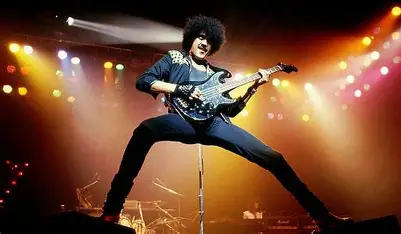
Thin Lizzy, Irelands Gift to Rock!
At the center of it all was Phil Lynott: singer, bassist, songwriter, bandleader, and a rare kind of front man—poetic but streetwise, melodic but tough, always with a storyteller’s eye. If there’s “not a lot known” in the mainstream about Phil compared to some rock icons, the music tells you plenty: a gift for character, rhythm, and choruses that feel like they’ve always existed.
Lynott was born in Birmingham, England, in 1949, and grew up largely in Dublin. That Irish upbringing mattered: not just culturally, but musically, because he absorbed the local scenes, the folk tradition, the soul and R&B records, and the rock explosion of the late ’60s. He wasn’t simply copying what was happening in London—he was translating it into something distinctively his own.
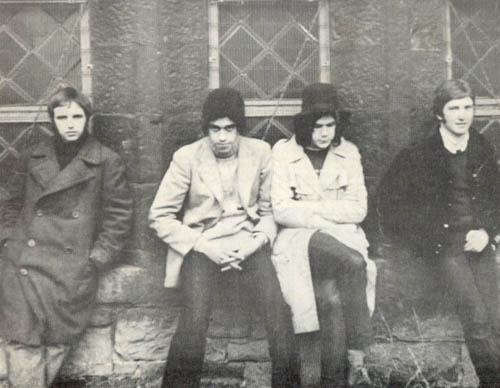
Before Thin Lizzy became “Thin Lizzy,” Phil was already working hard in bands, learning what worked onstage and what fell flat. One of his key early groups was Skid Row (not the later American band of the same name), where he played alongside guitarist Gary Moore. That early connection would echo through Thin Lizzy’s history in important ways.
Those formative years weren’t glamorous. Like many young musicians, Lynott did the rounds of rehearsals, lineup changes, and gigs that paid more in experience than money. But it’s exactly that grind that sharpened his sense of songcraft—how to hook a crowd, how to pace a set, and how to write lyrics that felt lived‑in rather than invented.
Thin Lizzy formed in Dublin in 1969. The classic original trio is often summarized as Phil Lynott on bass and vocals, Brian Downey on drums, and Eric Bell on guitar. This was the three‑piece outfit: compact, direct, and powerful when it clicked—built around Lynott’s voice and Downey’s feel, with Bell providing the guitar color.
Even early on, Thin Lizzy sounded like a band searching for its signature. There was rock, yes, but also a melodic sensibility and a willingness to lean into mood and narrative. Lynott didn’t just want riffs; he wanted scenes, characters, and lines you could quote.
Their earliest recordings captured a group still stretching out. The production and budgets weren’t huge, but the ambition was. You can hear them testing different angles: heavier moments, more reflective passages, and the kind of rhythmic swing that would become a Lynott hallmark.
Thin Lizzy Breaks Through!
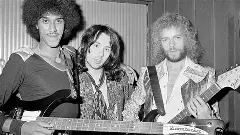
The first big breakthrough for Thin Lizzy came with “Whiskey in the Jar,” their rocked‑up take on the traditional Irish song. It became a major hit and, for many casual listeners, remains the entry point. Importantly, it also showed how the band could honor Irish roots while still sounding like a contemporary rock act.
Success can be a mixed blessing, though. A hit single opens doors, but it can also create expectations—especially if people start thinking you’re “the band who does that one folk‑rock tune.” Lynott, in particular, was too restless for that. He wanted Thin Lizzy to be seen as a serious, evolving rock band with original material and a unique voice.
As the early ’70s continued, lineup pressures and musical direction became real issues. The trio format has its strengths, but it also exposes everything—every gap, every weakness, every moment where you might wish for a second guitar to thicken the sound or add harmonic punch.
Eric Bell’s guitar work was vital in the early days, but the pace of touring and the band’s growing profile put heavy strain on the lineup. Eventually Bell departed, and that change—difficult as it was—pushed Thin Lizzy toward the next phase of their identity.
Gary Moore joined the band, but clashes resulted in him leaving after a few months.
This is where the story begins to tilt toward the version of Thin Lizzy that modern rock fans speak about in reverent tones. The band began experimenting with additional guitar firepower, moving away from the strict three‑piece approach toward a broader, more dramatic sound.
The “twin guitar” idea—two lead‑capable guitarists weaving harmonies and trading lines—didn’t just add volume. It added architecture. Suddenly songs could have guitar melodies that functioned like vocal hooks, and solos that felt composed rather than simply improvised.
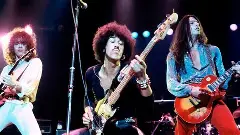
A key moment in this evolution was the arrival of Scott Gorham and Brian Robertson. With Lynott and Downey, that created the legendary four‑piece: bass/vocals, drums, and two electric guitars capable of harmony leads and duelling solos. It’s hard to overstate how decisive that combination was for the Thin Lizzy sound.
With that lineup, the band could build songs around dramatic twin‑guitar themes—those soaring, parallel lines that felt heroic without becoming cheesy. They weren’t just “solos”; they were part of the songwriting, as essential as the chorus.
Phil Lynott’s role in this can’t be overlooked. While the guitars got a lot of attention (and deservedly so), Lynott was the one threading it together: shaping melodies, anchoring the groove with his bass, and writing lyrics that balanced swagger with vulnerability.
The mid‑’70s were where the band’s classic identity hardened into place: sharp riffs, big choruses, and stories that sounded like they came from street corners and late‑night bars rather than fantasy novels. Thin Lizzy could be tough, but they could also be tender—and Lynott made that emotional range feel natural.
Then came the album and era that many fans point to as a defining statement: **Jailbreak**. The phrase “Thin Lizzy Jailbreak” has become a kind of shorthand for their breakthrough into a broader rock consciousness, powered by the title track and the now‑iconic “The Boys Are Back in Town.”
“The Boys Are Back in Town” did more than climb charts—it introduced Thin Lizzy to countless listeners who hadn’t followed the earlier years. It captured something universal: the camaraderie, the myth of returning heroes, the feeling of a night about to kick off. And under it all, you can hear that twin‑guitar lift giving the song its wings.
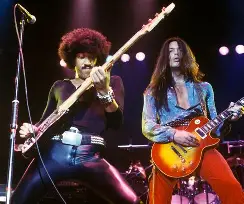
“Johnny the Fox” followed in the same general period, and it’s often discussed as part of the band’s run of classic records. The album continued the storytelling approach and showed that Thin Lizzy weren’t a one‑album wonder. They were building a catalogue—song by song—where melody and muscle lived side by side.
If you’re exploring Thin Lizzy Songs this is where it gets addictive: each album opens a slightly different door. Some tracks are built for arenas, others feel like intimate narratives set to electric guitars. Lynott had a way of making even a quick lyric sketch feel like a complete character study.
The band’s reputation as a live act also became central to their legend. Thin Lizzy onstage could stretch, fight, lock in, and then suddenly snap into a harmony line so tight it felt like it had been engineered. That tension—loose swagger meeting precise musicianship—was part of the thrill.
That live power is famously captured on “Live and Dangerous”, an album often cited among the great live records in rock. Beyond the debates fans sometimes have about live albums in general, the impact is undeniable: it presents Thin Lizzy as a fully armed unit, turning studio Favorites into big, breathing, crowd‑charged statements.
And then there’s “Black Rose: A Rock Legend”, an album title that almost reads like a mission statement. It’s also notable for featuring Gary Moore again—bringing that early Skid Row connection full circle. Moore’s fiery style fit the Thin Lizzy framework beautifully, giving the songs an extra edge and a dramatic flair.
The twin‑guitar approach that Thin Lizzy helped popularize became a blueprint for later hard rock and metal bands—especially the idea that harmony leads could be as memorable as vocal melodies. You can hear its influence across decades: in how bands arrange guitar parts, how they write “hero” melodies, and how they use two guitars to create conversation rather than clutter.
What made Thin Lizzy’s version special, though, wasn’t just the technique. It was taste. The harmonies served the song. The solos often felt like they belonged to the narrative arc—like an instrumental verse where emotion takes the wheel and language steps aside.
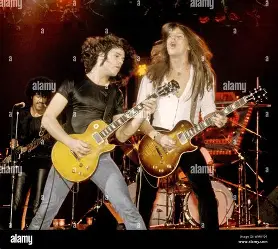
Through all the personnel changes and shifting eras, Phil Lynott remained the emotional and creative anchor. He had a rare ability to project confidence while writing lines that revealed doubt, longing, or pain. That duality is one reason Thin Lizzy still feel human, not just “classic rock.”
Lynott also mattered culturally: a charismatic Irish frontman who carried himself like a star, but never lost the storyteller’s instincts. He helped put Irish rock on a larger stage, and he did it without sanding down his identity. Even when the music leaned hard, the voice behind it still sounded like Phil.
Brian Robinson departed, in 1978 and back came Gary Moore for another spell. Gary departed midway through an American tour, but remained friends with Phil, contributing Gary's album "Back On the Streets", adding vocals to "Parisienne Walkways"
Sadly, the story has an unfortunate end. Phil Lynott died in January 1986 at just 36 years old. The loss hit hard because he wasn’t only a musician; he was the guiding spirit of Thin Lizzy—a writer and performer whose best work feels inseparable from his personality.
Looking back, it’s the arc that’s so compelling: the early three‑piece battling for a sound, the breakthrough moments, the transformation into the four‑piece that perfected the twin‑guitar attack, and the run of albums—"Jailbreak", "Johnny the Fox", "Black Rose*", and "Live and Dangerous"—that secured their place in rock history.
If you’re new to Thin Lizzy, the best way in is to follow the journey in order: hear the early hunger, then the expanding ambition, then the twin‑guitar glory when everything locks into place. And if you already love them, revisiting the story makes the music hit even harder—because you can hear the humble beginnings inside the legends, and you can hear Phil Lynott’s voice guiding it all the way through.
Enjoy this site? Share with friends!